
Climate Action Roadmap highlights progress on Public Transport Decarbonisation
The National Transport Authority (NTA) has published its latest Climate Action Roadmap, outlining continued progress in reducing emissions and improving energy efficiency across public transport and its own operations.
Leadership and future outlook
The Roadmap reaffirms the NTA’s role as a public sector leader in sustainable transport and its contribution to Ireland’s national climate targets. While meaningful progress has been achieved, it also highlights that significant further action will be required in the years ahead.
Emissions context and sector role
Transport remains a key contributor to national emissions, and the NTA plays a central role in supporting the transition to more sustainable travel through investment in public transport, active travel and demand management. A defining feature of the NTA’s emissions profile is that the vast majority arises from Public Service Obligation (PSO) transport services delivered on its behalf, meaning emissions must be reduced even as services continue to expand.
Progress across public transport services
The Roadmap highlights how different parts of the public transport network are progressing along the transition to lower emissions:
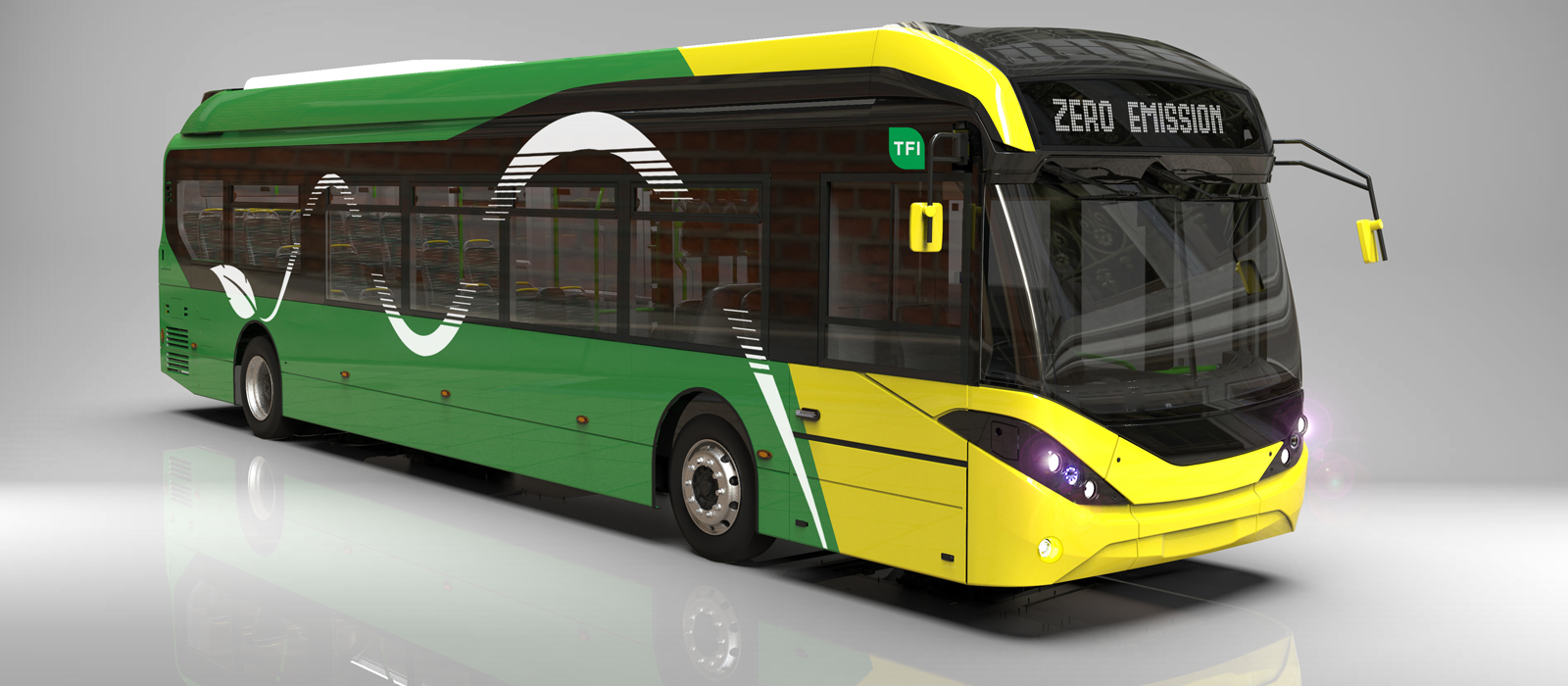
- Urban bus services are undergoing a significant transformation, with the continued rollout of zero-emission, battery-electric buses expected to deliver substantial emissions reductions over time, even as service levels increase.
- DART and Luas services, which are already fully electrified, continue to benefit from the decarbonisation of the national electricity grid, resulting in ongoing reductions in emissions intensity.
- InterCity and commuter rail services remain largely diesel-operated at present. While some efficiency gains and lower-carbon fuel blends are being explored, emissions reductions in this category are expected to be more gradual pending further electrification.
- Regional coach services are expanding significantly to enhance connectivity, particularly in rural and regional areas. While this growth is essential, it presents challenges for emissions reduction given current technological constraints for longer-distance services.
- Local Link services have expanded rapidly to improve rural accessibility, delivering important social and economic benefits, while achieving incremental emissions improvements through more efficient vehicles, fuel blends and early electrification.
Overall, these trends reflect a transport system in transition; expanding in scale, improving in efficiency, and progressively shifting towards lower-carbon technologies.
Supporting a broader shift to sustainable travel
Travel Behaviour and Demand Management
Beyond fleet and technology, the NTA’s Climate Action Roadmap underscores the importance of a wider shift in how people travel. Investment in public transport, walking and cycling, alongside measures to reduce unnecessary journeys and improve system efficiency, will be central to achieving national climate objectives.
Collaboration and Major Programmes
The NTA is working closely with government, local authorities, transport operators and industry partners to deliver major infrastructure programmes such as BusConnects, DART+ and MetroLink, alongside the Moving Together strategy, which aims to influence travel behaviour and reduce demand for carbon-intensive journeys.
Climate Resilience and Adaptation
Recognising that sustainability extends beyond carbon emissions, the Roadmap also places increased emphasis on climate resilience and the natural environment. This includes integrating climate change adaptation into the planning and delivery of transport infrastructure, ensuring networks are better prepared for extreme weather and longer-term climate risks.
Biodiversity and Environmental Sustainability
In parallel, the NTA’s Biodiversity Action Plan embeds biodiversity protection and enhancement within transport projects and programmes, supporting habitat connectivity, nature-based solutions and broader environmental sustainability. Together, these measures aim to deliver a transport system that is not only lower carbon, but also more resilient and supportive of Ireland’s wider ecological objectives.
Continued focus on energy efficiency and organisational performance
Alongside its transport remit, the NTA continues to improve the sustainability of its own operations. The move to a modern, energy-efficient head office, combined with enhanced monitoring systems and targeted energy initiatives, is contributing to improved energy performance and reduced emissions from corporate activities.
The organisation remains committed to meeting its public sector targets for emissions reduction and energy efficiency, recognising that strong governance, staff engagement and sustainable procurement practices all play a critical role in delivering these outcomes.
Looking ahead with future actions and investment
The Climate Action Roadmap is designed as a live, evolving document, to be updated annually as data improves and new measures are implemented. While progress to date is significant, the Roadmap makes clear that further action is required to meet the scale of Ireland’s climate ambition.
Through continued investment, innovation and collaboration, the NTA will play its part in delivering a cleaner, more efficient and more resilient transport system, supporting economic development, enhancing quality of life, and contributing to a low-carbon future.