About the Smarter Travel Programme
TFI Smarter Travel is a national voluntary behaviour change programme, supporting employers and third level institutions to implement voluntary Travel Plans. These plans focus on promoting and encouraging staff and students to sustainably and actively commute and beyond, and for organisations to consider flexible working arrangements. Campuses are also encouraged to promote Smarter Travel as part of the curriculum and through student projects. Behaviour change interventions such as the annual Step Challenges and Cycle Challenge promote active travel and support organisations in encouraging their staff and students to be more active on the commute and for leisure purposes.
Partner Package
The TFI Smarter Travel Programme is open to organisations across Ireland and there is no cost to join. As a programme partner you can avail of the following:
- Online employee travel survey, analysis, and suggested Action Plan to facilitate active and sustainable travel on the commute and beyond;
- Information and support to promote walking, cycling, public transport, carpooling and other relevant sustainable travel schemes;
- Promotional tools e.g., banner stands, promotional materials, and mapping resources;
- Participation in the annual behaviour change Walking and Cycling Challenges and programmes, events, and seasonal promotions, and
- Partner seminars and networking opportunities.
As a programme partner you will be assigned a designated Smarter Travel Consultant who will support you with your organisation’s Workplace Travel Plan.
Smarter Travel For Workplaces
TFI Smarter Travel is a behaviour change programme working with large employers to implement voluntary Workplace Travel Plans that promote and encourage sustainable and active commuting.
A growing number of Irish employers are engaging in Smarter Travel, working with their employees to facilitate travel choices in favour of more sustainable transport – resulting in reduced costs, enhanced employee wellbeing, better access, and more effective parking management.
You can see a list of our Workplace Partners as well as a selection of Success Stories by visiting TFI Smarter Travel Workplace Partners.
There are significant benefits for an employer effectively promoting more sustainable travel, including:
- Reduced costs associated with providing car parking for employees or visitors;
- Reduced business mileage costs;
- Reduced staff downtime spent travelling on business;
- Reduced pressure on parking spaces so they are available to those with most need;
- Enhanced employee wellbeing and teambuilding opportunities;
- Reduced carbon emissions associated with travel;
- Land formerly under parking released for more productive purposes;
- Safer and more fuel-efficient fleet driving;
- Increased accessibility to the employer’s site for employees, visitors, and suppliers;
- Compliance with planning permission conditions;
- Reduced absenteeism and
- Reduced employer’s PRSI payments (through Cycle to Work and Taxsaver ticket for public transport schemes).
Workplace Travel Plans make business sense, with some of the biggest employers in Ireland, the UK and internationally undertaking them as a core business management strategy. These organisations are market leaders, and regularly receive accreditation and awards, recognising their achievements in this area, including for example, ISO14001, Ireland’s Best Workplaces, Green Awards and Chambers Ireland Awards.
Internationally, Workplace Travel Plans have been shown to reduce single-occupant car use by with the reduction depending on the extent of the travel plan and site-specific issues. This reduction in car use can represent significant cost savings to an organisation, in terms of both money and employee time.
While Workplace Travel Plans can include some ‘hard’ measures (e.g., infrastructure such as cycle parking, cycle lanes, showers or lockers), they can be focused on ‘softer’ measures (e.g., promotion, marketing, events). Many of the actions in these plans are low-cost, but highly visible, and contribute to a culture of sustainability within the organisation.
A Workplace Travel Plan is a package of measures aimed at reducing the need for an individual to travel alone by car. The travel plan comprises actions to promote walking, cycling, public transport, carpooling, car sharing, and the use of technology instead of travel or flexible working practices.
Employee travel can often be an invisible cost for an organisation, in terms of both time and money.
Workplace Travel Plans consist of a package of measures which, if implemented, support more sustainable and cost-effective travel habits among employees, clients, and visitors. These plans usually focus on employee commuting, but can extend to business travel, fleet management and freight transport, if these are significant activities for an organisation. There are a number of benefits to an organisation implementing a Workplace Travel Plan, as outlined on our website.
| A&L Goodbody LLP | Department of Culture, Communications & Sport- Tom Johnson House | Inland Fisheries | Royal Irish Academy |
| AECOM | Department of Enterprise | Irish Blood Transfusion Service | Royal Victoria Eye and Ear Hospital |
| Alchelyst Limited | Department of Finance | Irish Fiscal Advisory Council | SEAI |
| An Bord Pleanala | Department of Health | Irish Museum of Modern Art | SETU Carlow & Wexford Campus |
| Arcadis Ireland – North Wall Quay | Department of Housing | Jacobs | SETU Waterford |
| Arthur Cox | Department of Justice | John Spain Associates | Sligo University Hospital |
| Bicycle Engineering Academy | Department of Public Expenditure, Infrastructure, Public Service Reform and Digitalisation | KPMG | South Dublin County Council |
| Boston Scientific Cork | Department of Social Protection | KPMG Harbourmaster | Southern Regional Assembley |
| Boston Scientific Galway | Department of Transport | Law Reform Commission | Sports Ireland Campus |
| Breedon Cement | Dublin City Council | LCETB / CFE – Mulgrave Street | St James Hospital |
| Business in the Community Ireland | Dublin City University | Mater Hospital | Strata |
| Cavan County Council | Dún Laoghaire – Rathdown County Council – County Hall | Maynooth University | Stryker Limerick |
| Central Bank of Ireland | Dundalk Institute of Technology | McCann FitzGerald LLP | Tallaght University Hospital |
| Central Statistics Office – Cork | Edwards Lifesciences | M-CO | Technological University of the Shannon – Athlone Campus |
| Central Statistics Office – Rathmines | Egis (formerly JB Barry & Partners) | Merlin Park University Hospital | Technological University of the Shannon – Moylish Campus |
| Central Statistics Office – Swords | Eirgrid | MKC Communications | The Courts Service – Phoenix House |
| CHI at Temple Street | Ennis Hospital | MKO Environmental Planning | The Economic and Social Research Institute |
| CIE – Heuston Station | Environmental Protection Agency (EPA) | National Council for Special Education | The View |
| Citi | ESB | National Library of Ireland | Transport Infrastructure Ireland |
| Clandillon Civil Consulting – Naas Office | Expleo | National Maternity Hospital | Triangle |
| Clare County Council | Fingal County Council- Civic Offices | National Orthopaedic Hospital Cappagh | Trinity College Dublin |
| Cluid Housing | Fingal County Council- County Hall | National Rehabilitation University Hospital | Tuath Housing |
| Coimisiún na Meán | Foras na Gaeilge | National Transport Authority | TUD – Aungier |
| Collen Construction | Forensic Sciences Ireland | National Treasury Management Agency | TUD – Blanchardstown |
| Commission for Regulation of Utilities | Genesys Cloud Services Ireland Limited | National University of Ireland | TUD – Bolton Street |
| Commission of Communications Regulation | Gilead Sciences | Northern Trust Limerick | TUD – Grangegorman |
| Competition and Consumer Protection Commission | Office of Attorney General | TUD – Tallaght | |
| Cork City Council | Grant Thornton | Office of Public Works – 1GQ | Turner & Townsend Limited – Dublin |
| Cork University Hospital | Greyhound Racing | Office of Public Works – Trim | University College Cork |
| Cornmarket Financial Services Ltd. | Greyhound Racing Ireland- Curraheen Park | Office of the Ombudsman | University College Dublin |
| Croke Park | Greyhound Stadium- Kilcohan Park | Office of the Planning Regulator | University Hospital Galway |
| Culture Co-Working | Greyhound Racing- Shelbourne Park | OPW- Dublin castle | University Hospital Kerry |
| Culture, Communications and Sport – Headquarters | HEAnet & Educampus | OPW- Kilkenny castle | University Hospital Limerick |
| daa | Henry J Lyons | Ornua | University of Galway |
| DBFL Consulting Engineers | Houses of the Oireachtas | PwC Ireland | University of Limerick |
| Deloitte | HSE Limerick – Castletroy | Quality and Qualifications Ireland | Verizon – Eastpoint Business Park |
| Department of Agriculture | HSE Limerick – Roselawn | Rabobank Dublin | Version 1 |
| Department of Children, Disability and Equality – Miesian Plaza | IADT | Research Ireland | Waterford City & County Council |
| Department of Climate, Energy and the Environment | IDA Headquarters | Residential Tenancies Board | Yahoo |
| Department of Culture, Communications & Sport- Killarney | Indecon | Royal College of Surgeons in Ireland |
Smarter Travel For Campus
A growing number of Irish Third Level Campuses are engaging in Smarter Travel, working with students and employees to facilitate more sustainable travel choices – resulting in better access, enhanced student and employee wellbeing, reduced costs, reduced carbon emissions, and more effective parking management.
You can find out more information on our Campus Partners and some of their success stories by visiting TFI Smarter Travel Campus Partners.
DCU’s membership of the NTA Smarter Travel Campus programme has brought many advantages over our years of membership. The annual staff and student survey supported under this programme provides extremely valuable information regarding the modal choice and commuting habits, improving our support for commuters and enhancing our future planning. We are very active participants in the NTA challenges and awards with growing levels of engagement every year – we have even won a few!
Samantha Fahy, Sustainability Manager, Dublin City University.
A Campus Travel Plan consists of a package of measures which, if implemented, support more sustainable and cost-effective travel habits among students, employees, and visitors.
Travel plans comprise actions to promote walking, cycling, public transport, carpooling, car sharing, the use of technology instead of travel and flexible working practices. Campus Travel Plans usually focus on commuting but can also include business travel or suppliers and visitors coming onto campus.
Student and employee travel can often be an invisible cost for an organisation, in terms of both time and money.
There are significant benefits for the organisation effectively promoting more sustainable travel to campus, including:
- Increased accessibility to campus for students, employees, visitors, and suppliers;
- Reduced costs associated with providing car parking for students, employees or visitors;
- Reduced pressure on parking spaces so they are available to those with most need;
- Reduced mileage costs and downtime spent travelling;
- Enhanced student and employee wellbeing and teambuilding opportunities;
- Reduced carbon emissions associated with travel;
- Land formerly under parking released for more productive purposes;
- Compliance with planning permission conditions;
- Reduced absenteeism and
- Reduced employer’s PRSI payments (through Cycle to Work/ Taxsaver ticket for public transport schemes).
Campus Travel Plans make business sense, with some of the biggest Third Levels and other employers in Ireland, the UK and internationally undertaking them as a core business management strategy. These organisations are market leaders, and regularly receive accreditation and awards recognising their achievements in this area, including for example, Green Flags, ISO14001, Ireland’s Best Workplaces, and Chambers Ireland Awards.
Internationally, travel plans have been shown to reduce single-occupant car use by with the reduction depending on the extent of the travel plan and site-specific issues. This reduction in car use can represent significant cost savings to an organisation, in terms of both money and employee time.
While campus travel plans can include some ‘hard’ measures (e.g., infrastructure such as cycle parking, cycle lanes, showers, or lockers), they can focus primarily focused on ‘softer’ measures (e.g., promotion, marketing, events). Many of the actions in Campus Travel Plans are low-cost, but highly visible, and contribute to a culture of sustainability within the organisation.
The Smarter Travel Mark is a three tier certification that recognises and celebrates organisations that support active and sustainable travel on the commute and beyond for their workforce, students and visitors, resulting in a reduction in single-person car usage.
Certification levels:
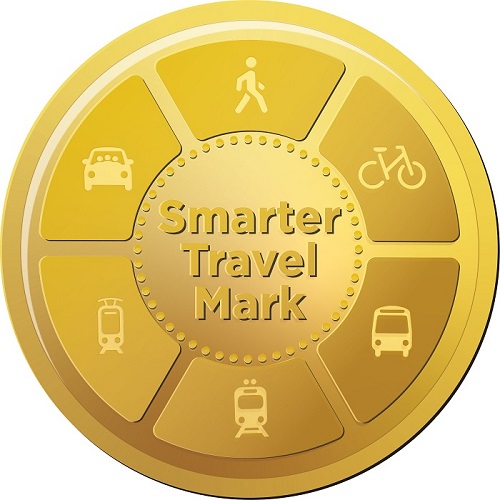 |
Gold: has outstanding measures in place that support sustainable and active commuting and is committed to long term investment and leadership in Smarter Travel |
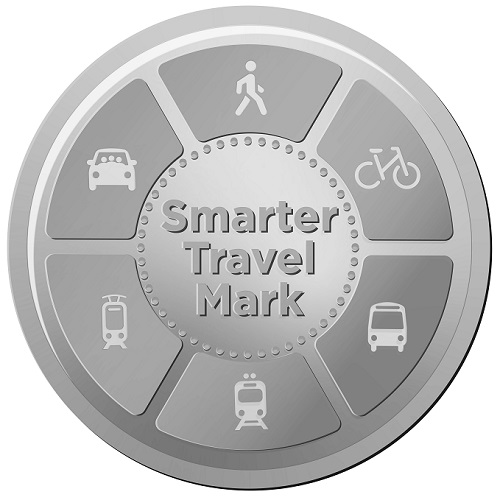 |
Silver: has a broad range of measures in place that support sustainable and active commuting and is committed to further Smarter Travel actions. |
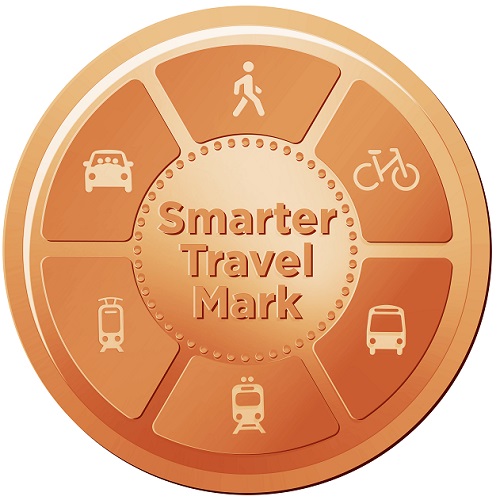 |
Bronze: has basic measures in place that support sustainable and active commuting and is committed to further Smarter Travel actions. |
For more information and how to apply, visit our website here
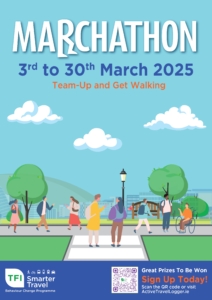
Smarter Travel Campaigns
Contact Us
If you would like to find out more about this programme, getting involved or you have a general enquiry, please fill out the contact form below and a member of our team will respond to you as soon as possible:
Contact Form
Alternatively, you can email your query directly to one of the following email addresses:
| Workplaces – info@smartertravelworkplaces.ie | Campus – info@smartertravelcampus.ie |
| Step Challenge – stepchallenge@nationaltransport.ie | Cycle Challenge – cycling@nationaltransport.ie |
Follow us on