Minister Announces Expansion of Safe Routes to School Programme (SRTS)
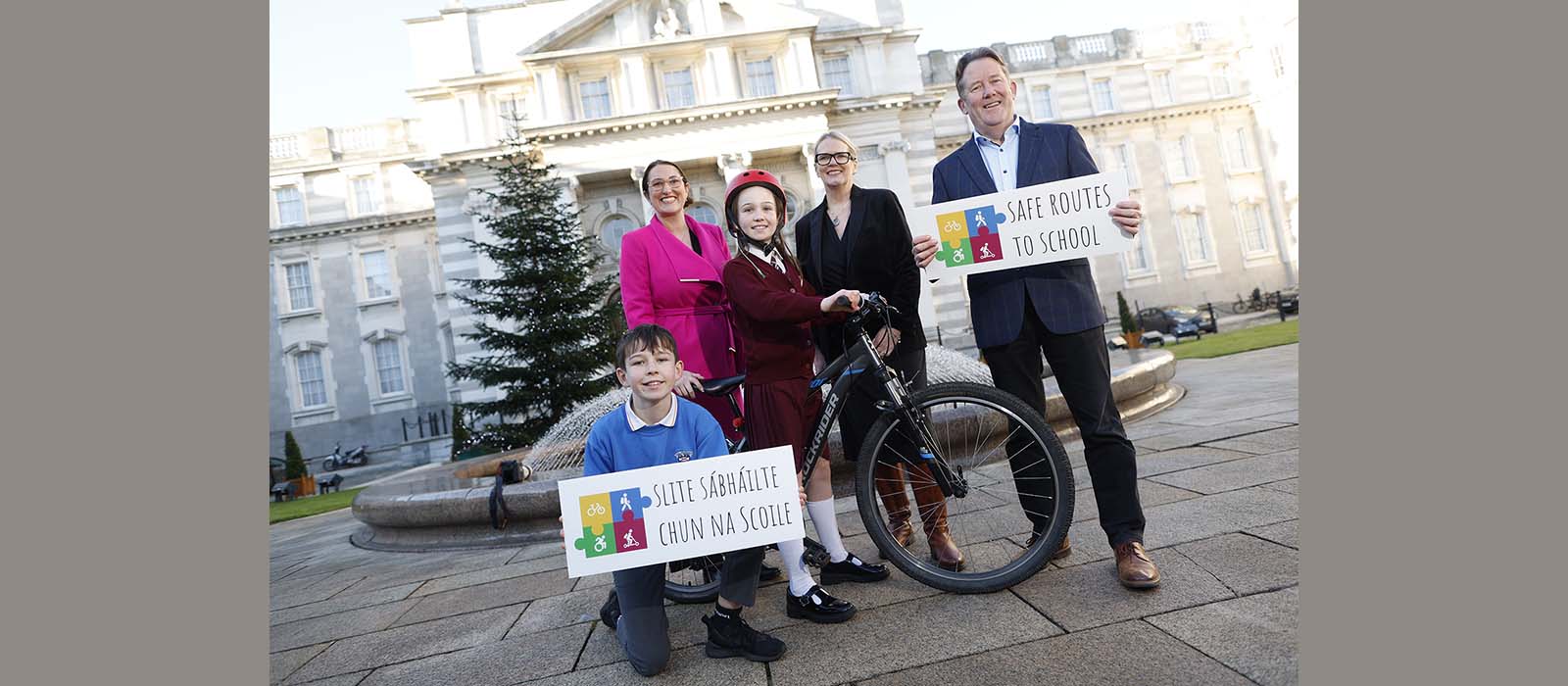
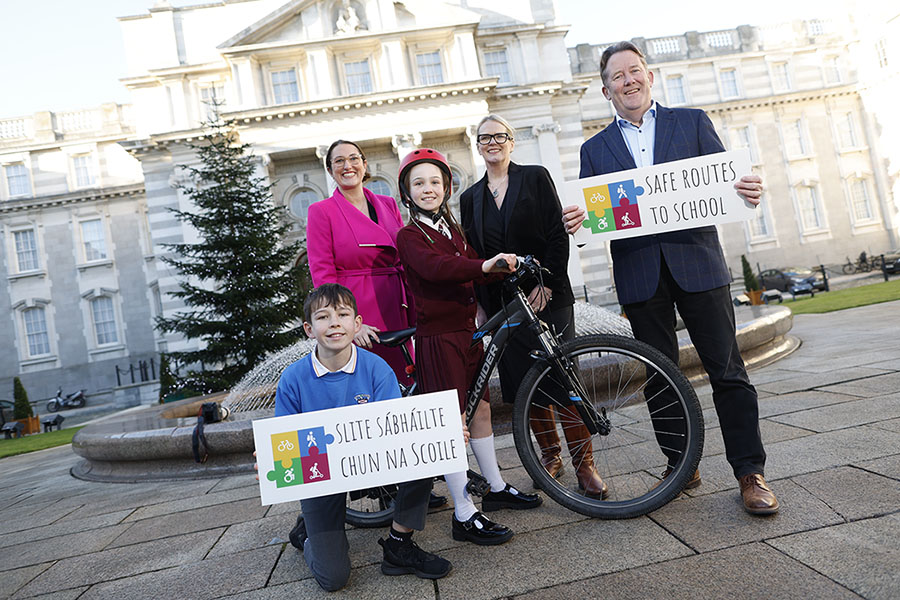
Minister for Transport Darragh O’Brien TD, Minister of State Sean Canney TD and Minister of State Emer Higgins TD, along with the National Transport Authority, have announced the next round of schools to benefit from the Safe Routes to School (SRTS) programme.
105 Schools Added Nationwide
105 additional schools covering every county across the country will now be brought into the SRTS programme to begin delivering safer environments for children as they walk, wheel or cycle to school. These improvements include school zone features such as pencil shaped bollards, colourful road markings, upgraded footpaths, and enhanced pedestrian crossings, designed to slow traffic and make walking and cycling safer for students. The programme aims include improving safety and public health while reducing car congestion and supporting climate goals.
SRTS Round 4 Schools list – National Transport
Significant Growth Since 2021
Since its launch in 2021, the SRTS programme has grown significantly with 526 schools now actively incorporated into the programme and around €50 million invested in projects to date across Ireland. Tangible progress has been made in every city and county in the country, giving more families the option to choose active travel for at least part of the school journey.
Programme Funding and Community Engagement
The SRTS programme is funded by the Department of Transport through the National Transport Authority (NTA). The Education and Community Action Team at An Taisce is co-ordinating the programme.
The programme works closely with school communities, parents and local authorities to ensure that proposed measures reflect local needs and gain broad support through community engagement. Almost half of participating schools have reached an advanced stage, with 227 projects either completed, under construction or in the final design phase following public consultation.
Round 4 Tailored Measures for Rural Schools
Round 4 also includes schools located on higher-speed rural roads. The 12 schools in this category will benefit from tailored measures such as prominent signage and road markings to alert motorists and encourage lower speeds. This follows successful trials in Galway, Roscommon and Donegal, which recorded speed reductions near the schools involved.
Minister for Transport Darragh O’Brien Highlights Safety and Sustainability
Minister for Transport Darragh O’Brien said: “I am delighted to see the Safe Routes to School Programme continuing to advance at pace. This nationwide investment in walking and cycling infrastructure, estimated at around €15-20 million for 2026, not only strengthens the safety of our students but also encourages lifelong habits of sustainable travel. The benefits-better health, safer journeys, lower emissions, and reduced congestion-are already evident in schools where improvements have been delivered. The annual report we launched earlier this year shows the transformative effect it has had: a 102% increase in park and stride; a 36% increase in cycling, a 6% increase in walking and a 17% decrease in car use. I look forward to seeing the next 105 schools progress through the programme and experience these positive outcomes.”
Minister of State Canney Emphasises Safer School Environments
Minister of State Sean Canney said: “The way we move around our towns and cities needs to change and our reliance on private car use, particularly for our shorter journeys, must decrease. At its core, this programme is about making school environments safer by reducing traffic speeds and improving how children interact with the road. The default choice of many is to travel to work or school by car, but with the provision of infrastructure through the Safe Routes to School Programme, walking, wheeling and cycling should become a viable option for much of the school community and will give people the option to leave the car at home.”
Minister of State Higgins Welcomes Inclusive Active Travel Investment
Minister of State Emer Higgins said: “The Government is committed to expanding our Active Travel and Greenway infrastructure network through the provision of walking and cycling facilities in our cities, towns, villages and rural areas. This commitment was demonstrated in the recent Budget, with €360 million allocated for active travel and greenways in 2026. I welcome the announcement of the latest Round of schools for inclusion in the Safe Routes to School Programme, which has committed to including at least one special school in all forthcoming Rounds of the Programme under the recent National Human Strategy for Disabled People. This will encourage inclusive, safe and sustainable transport for young people of all abilities across the country.”
NTA Highlighting Positive Impact on Travel Habits
Anne Shaw, Chief Executive Officer for the NTA said: “The schools where we have already put safety measures in place are reporting a significant increase in the number of children walking or cycling to school. With the announcement of a further 105 schools actively taking part, this trend is set to grow. Establishing healthier travel habits at a younger age will, for many, continue into adulthood and the NTA is delighted to be supporting this initiative as it goes from strength to strength.”
Strong Demand Since Safe Routes to School Programme (SRTS) Programme Launch
- When the programme launched in 2021, 932 schools applied, nearly a quarter of all schools nationally. More than half of those have already been included in the active programme and, it is anticipated, the remaining schools will be added on a rolling basis in future rounds.
- Funding is available to local authorities to deliver Safe Routes to School infrastructure through the NTA’s Active Travel Allocation from the Department of Transport. Costs and timelines depend on factors such as required interventions, public consultation, planning consent, construction scheduling and annual local authority budgets.
Selection Criteria for Round 4 Schools
- Round 4 schools were selected using the same criteria as previous rounds, ensuring a mix of school types (primary and secondary) and locations (urban, suburban and rural). Selection also considered socio-economic diversity (DEIS and non-DEIS schools), demonstrated commitment to sustainable travel (e.g., Walk on Wednesday, Cycle Bus, Park and Stride, audits), proximity to other schools and alignment with active travel or safety schemes planned by local authorities.
- 136 school zones are complete, 45 are under construction, 46 are at late phases of design, following public consultation processes, 23 are going through public consultation processes, 80 are undergoing preliminary design and 79 are at options development.
- In addition to SRTS, 464 schools nationally have benefited from Active Travel projects up to the end of 2024.
Lifecycle of a Safe Routes to School video