
Walking, wheeling and cycling take up to 33,000 cars off Limerick Shannon Metropolitan Area roads every day, according to latest Walking and Cycling Index.
NTA survey shows increase in number of younger adults cycling.
64% of residents are in favour of additional investment in walking and wheeling, and 54% are in favour of additional investment in cycling.
The National Transport Authority has today published the findings of its latest survey of walking, wheeling and cycling in the Limerick Shannon Metropolitan Area, which shows a marked increase in the number of young people aged 16-25 cycling at least once a week. The figures show that 33% of young people in this cohort cycle at least one day a week, up from 27% in 2023. The number of adult residents walking or wheeling (meaning the use of a wheelchair or mobility scooter) for everyday journeys remains strong with 51% doing so at least five times a week. The survey also shows that people who walk, wheel or cycle for non-leisure trips when they could have used a car take up to 33,000 cars off roads in the Limerick Shannon Metropolitan Area every day.
The Walking and Cycling Index provides the largest ever assessment of walking, wheeling, and cycling in Ireland and the UK. It is delivered in collaboration with Limerick City and County Council and Clare County Council, the National Transport Authority and the sustainable transport charity, Walk Wheel Cycle Trust. Alongside the Limerick Shannon Metropolitan Area Walking and Cycling Index, the Dublin, Cork, Galway, and Waterford Metropolitan Areas are also publishing Index reports today.
Limerick Metropolitan Region Walking and Cycling Index 2025
The Limerick Shannon Metropolitan Area Walking and Cycling Index is based on an independent demographically representative survey of more than 1,100 residents from across the Limerick Shannon Metropolitan Area, aged 16 and above, not just those who walk, wheel or cycle. The Metropolitan Area is centred on Limerick City and covers the area from Cloonlara to Patrickswell and west to Shannon.
The survey reveals a strong appetite for future walking and cycling with 41% wanting to walk more and 27% wanting to cycle more. 64% of residents are in favour of additional investment in walking and wheeling, and 54% are in favour of additional investment in cycling.

Key findings from the 2025 Limerick Shannon Metropolitan Area Walking and Cycling Index:
- 51% of adult residents walk 5 or more days a week, 58% use a car 5 or more days a week and 15% of adults cycle at least once a week.
- 33% of young adults aged 16-25 cycle at least one day a week, up from 27% in 2023.
- 69% of residents support building cycle tracks physically separated from traffic and pedestrians even where that means less room for other traffic.
- Every day those who walk, wheel and cycle for non-leisure trips when they could have used a car take up to 33,000 cars off the road in the Limerick Shannon Metropolitan Area. If all of these cars were in a traffic jam it would tail back 157 kilometres.
- Residents walking, wheeling and cycling create an annual economic benefit for individuals and the Limerick Shannon Metropolitan Area of €145.4 million.
- Walking, wheeling and cycling improve public health in the Limerick Shannon Metropolitan Area, preventing 325 serious long term health conditions each year, saving the HSE €4.1 million equivalent to the cost of over 68,000 GP appointments.
- Those walking, wheeling and cycling instead of driving, save greenhouse gas emissions equivalent to 65,000 flights from Shannon Airport to London Heathrow Airport.
- There is a €1.62 net economic benefit for each km cycled instead of driven and €1.14 net economic benefit for each km walked instead of driven.
- 41% of residents want to walk more and 27% want to cycle more.
- 64% of residents are in favour of additional investment in walking and wheeling, and 54% are in favour of additional investment in cycling.
Economic Benefits of Active Travel
The report found that walking, wheeling and cycling creates an annual economic benefit for individuals and the Limerick Shannon Metropolitan Area of €145.4m. This includes €1.62 of a net economic benefit for each km cycled instead of driven and €1.14 benefit of each km walked instead of driven. These costs were determined through an analysis of travel time, vehicle operating costs, health benefits, air quality and taxation.
Environmental Benefits
Every day up to 33,000 return non-leisure walking, wheeling and cycling trips are made in the Limerick Shannon Metropolitan Area by people that could have used a car. If these cars were all in a traffic jam it would tail back 157 kilometers.
The report also found that walking, wheeling and cycling save 7,100 tonnes of greenhouse gas emissions in Limerick Shannon each year, which is equivalent to about 65,000 residents taking flights from Shannon Airport to London Heathrow Airport.

Health Benefits and Inclusivity
The benefits of walking, wheeling and cycling to the Limerick Shannon Metropolitan Area are outlined in the report, with the physical activity benefits of walking, wheeling and cycling preventing 325 long-term health conditions annually, valued at approx. €4.1m equivalent to the cost of over 68,000 GP appointments.
The Index showed that residents’ travel choices and their perceptions of walking, wheeling, and cycling vary between different groups. It found that 38% of residents with a disability walk or wheel at least five days a week in Limerick Shannon, compared to 53% of residents without a disability. While 51% of women and 51% of men walk or wheel at least five days a week, there remains a gender gap when it comes to cycling with 23% of men cycling at least once a week, compared with 8% of women.
What Residents Say Will Help Them Walk or Cycle More
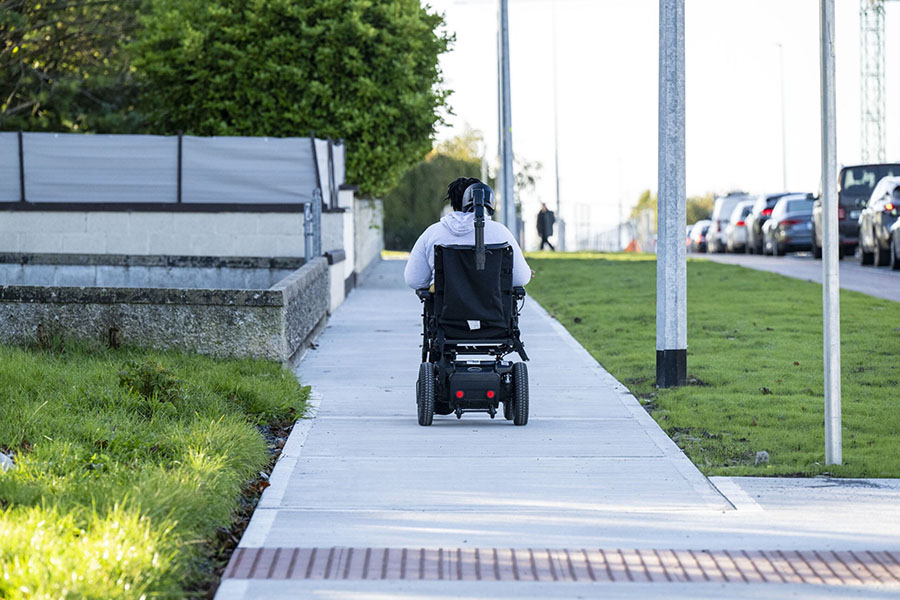
When asked what would help them walk or wheel more, Limerick Shannon Metropolitan Area residents point to better footpath accessibility including dropped kerbs at crossing points, nicer places along streets to stop and rest, and fewer cars parked on footpaths and more frequent crossing points with reduced wait times. The report found in the Limerick Shannon Metropolitan area that 92% of roads meeting at traffic‑light junctions now have a dedicated pedestrian crossing.
When asked what would help them cycle more, the majority of residents want infrastructural improvements such as traffic-free paths through parks or greenways, signed cycle routes along quieter streets, and cycle tracks along roads physically separated from traffic and pedestrians. The Limerick–Shannon area now has 15 km of traffic‑free paths away from roads, 26 km of cycle lanes along roads that are physically separated from both pedestrians and traffic, and 28 km of cycle tracks beside the footpath but marked out with a different surface.
The survey also shows a large majority of residents (69%) support building more cycle tracks physically separated from traffic and pedestrians, even where that means less room for other traffic.
Creating a Better Place to Live
Limerick and Shannon residents also recognise the importance of liveable neighbourhoods. 77% of residents support creating ‘low traffic’ neighbourhoods – where groups of streets, bordered by main roads, have ‘through’ motor vehicle traffic greatly reduced. 86% say they support reducing speed limits, improving crossing points and introducing protected cycle paths in school neighbourhoods. 75% of residents say more walking and wheeling routes from housing estates to bus stops would be useful.
Speaking on the Walking and Cycling Index, John Moran, Mayor of Limerick said: “As Mayor of Limerick, I am delighted to present the second Limerick Shannon Metropolitan Area Walking and Cycling Index. This report shows how active travel continues to play a vital role in shaping a healthier, more sustainable, and more connected Limerick and wider Midwest region. Every day, our residents walk and wheel the equivalent of seven times around the world, and cycle enough to circle the globe once.
We will, with continued government support, continue to invest in the infrastructure and initiatives that make walking, wheeling, and cycling the natural choice for everyday journeys.”
Príomh Chomhairleoir of Limerick City and County Council, Councillor Catherine Slattery, said: “The Walking and Cycling Index is an important tool for understanding how people experience their streets and public spaces, and what changes will make the greatest difference to their daily lives. The strong support for improved footpaths, safer crossings, and protected cycle lanes reflects a shared vision for a more inclusive and connected Limerick – Shannon metropolitan area.”
Director General of Limerick City and County Council, Dr. Pat Daly, said: “The Walking and Cycling Index gives us an evidence‑based picture of how people in the Limerick-Shannon Metropolitan Area are choosing to go about their day. What stands out in this year’s findings is the strong public support for safer, more accessible walking, wheeling and cycling networks, especially among younger adults. As a local authority, we are committed to responding to this demand with continued investment in high‑quality infrastructure that supports sustainable travel options and delivers long‑term environmental and economic benefits for the region.”
Cllr. Paul Murphy, Cathaoirleach Clare County Council said:
“As Cathaoirleach of Clare County Council, I am pleased to welcome the second edition of the Limerick Shannon Metropolitan Area Walking and Cycling Index. This report provides an updated view into how Shannon Metropolitan Area Residents feel towards different modes of transport including walking, wheeling, and cycling. The results of this survey help influence the type of investment and infrastructure people want, which in turn will contribute to an attractive and sustainable Metropolitan Area.”

What is needed to make walking, wheeling and cycling safer, easier and more attractive
Anne Shaw, CEO of the NTA said: “This latest edition of the Limerick Shannon Metropolitan Area Walking and Cycling Index provides valuable insights into how people travel and what is needed to make walking, wheeling and cycling safer, easier and more attractive. Since the last Index in 2023, we have worked closely with Limerick City and County Council and Clare County Council to invest in schemes that reflect our shared commitment to creating safe, connected streets.
The feedback in the report is clear: people in Limerick Shannon want to walk, wheel and cycle more. We are responding with infrastructure that supports this ambition and helps create a healthier, safer and more liveable Limerick Shannon Metropolitan Area.”
The Limerick Shannon Metropolitan Area Walking and Cycling Index can be accessed at Limerick Metropolitan Region Walking and Cycling Index 2025 – National Transport
Additional information on the Methodology
- The Walking and Cycling Index is the biggest assessment of walking, wheeling and cycling in urban areas in Ireland and the UK.
- In the Republic of Ireland, it is delivered in collaboration with the NTA and the local authorities for the 5 Metropolitan Areas of Dublin, Cork, Galway, Limerick/Shannon and Waterford. 17 UK cities and urban areas are also involved, including Liverpool City Region, Greater Manchester, Glasgow and Edinburgh.
- The Metropolitan Area is centred on Limerick City and covers the area from Cloonlara to Patrickswell and west to Shannon.
- The information in the reports comes from local data, modelling and an independent demographically representative survey of at least 1,100 residents aged 16+ in each Metropolitan Area.
- The survey was conducted face-to-face by the independent market research company Ipsos B&A from April to July 2025.
- The survey is representative of all Limerick Shannon Metropolitan Area residents, not just those who walk, wheel or cycle.
- The Walking and Cycling Index uses a model to analyse the costs and benefits of driving, walking and cycling. Inputs include travel time, vehicle operating costs, health benefits, air quality and taxation.
- All other data is sourced from city partners, national data sets or modelled and calculated by Walk Wheel Cycle Trust.
- Margin of error +/-3%.
- A more in-depth methodology is available at walkwheelcycletrust.org.uk/walking-cycling-index and Walking and Cycling Index 2025 – National Transport
- Use of the term ‘wheeling’ – Walk Wheel Cycle Trust provide this definition for the term ‘wheeling’ in the body of each Report. “We recognise that some people who use wheeled mobility aids, for example a wheelchair or a mobility scooter, may not identify with the term walking and may prefer to use the term wheeling. We use the terms walking and wheeling together to ensure we are as inclusive as possible.”